Online Job Scam: 12 Signs Every Woman Must Know

Online job scams are rising fast in 2026. Because of this, many women and remote job seekers looking for legitimate work-from-home jobs are becoming targets of fake recruiters and online employment fraud.
Reports show that scam job losses exceeded $220 million in early 2024, and 41% of job seekers applied to scam postings. Remote task scams grew 485% in 2025, with victims losing an average of $9,456.
If you are still unsure whether remote jobs are real or scams, read our detailed guide on Are Online Jobs Legit or Just Scams? Here’s How to Tell to understand the difference clearly.
At first glance, these fake job offers often look professional. They may even promise easy money, fast hiring, and high pay. However, behind these offers are online job scams, employment scams, job application scams, and fake job offers designed to steal money or personal information.
If you want to know how to spot an online job scam or avoid work-from-home scams, then this guide will show you 12 warning signs and ways to protect yourself.
What are an Online Job Scams?
Online job scams are a fake job offer. Essentially, it is made to:
- Take your money
- Steal your bank details
- Collect your ID information
- Make you work without pay
These scams are common on:
- Telegram
- Social media
- Fake job websites
Even though they look very real, they are dangerous.
Why Work From Home Scams Target Women
Many women look for:
- Flexible work
- Part-time jobs
- Remote income
- Work after a career break
As a result, scammers create offers that say:
- No experience needed
- Daily payment
- Easy typing work
- High income from home
Remember, real companies do not promise big money for simple work. If you’re specifically searching for safe earning options, you can explore our guide on Online Work for Women in Pakistan Without Investment to see verified and safer opportunities.
Online Job Scams Warning Signs (Complete List)
Here are clear red flags to watch. Pay attention to each one.
1. Upfront Payment Is a Red Flag: job offer scams
If they ask for:
- Registration fees
- Training fees
- Security deposit
- Software charges
Stop immediately. Real jobs never ask you to pay.
2. Unrealistic Income Claims: online job fraud
If someone promises:
- $100 per hour for typing
- Huge salary for simple tasks
- Guaranteed daily income
Chances are, it is a scam.
3. No Real Interview
Real companies:
- Take interviews
- Ask about skills
- Check your experience
Therefore, instant hiring is a danger sign.
4. They Create Urgency
They may say:
- Limited seats
- Offer ends today
- Pay now
This is because scammers want you to act fast.
5. Email Looks Unprofessional
Big companies like Amazon and Microsoft use official email addresses.
Hence, if a recruiter uses Gmail or Yahoo, be careful.
6. Job Details Are Not Clear
If the job description does not explain:
- Your tasks
- Your salary
- Work hours
- Company name
In that case, it may be fake.
7. They Ask for Personal Details Early
Never share:
- Bank details
- OTP codes
- ID copies
- Passport scan
Otherwise, you risk identity theft.
8. Fake Recruitment Agencies
Some scammers pretend to be HR agencies. So, always check:
- Company website
- Google reviews
- LinkedIn page
If nothing exists, be careful.
9. They Move You to WhatsApp
On platforms like Upwork, scammers ask to move the chat to WhatsApp or Telegram.
Instead, stay on secure platforms.
10. Fake Offer Letters
Scammers send professional-looking PDF offer letters.
However, documents can be copied. Always verify the company yourself.
11. Social Media Task Jobs
Some scams ask you to:
- Like videos
- Follow pages
- Subscribe to channels
At first, they pay small money. Later, they ask you to deposit money. Clearly, this is a trap.
Many beginners fall into these traps while searching for quick income. Instead, check our list of 10 Easy Remote Jobs You Can Start Today (No Interview Needed) to find safer alternatives.
12. No Online Presence
Search the company name on Google.
If you find:
- No website
- No reviews
- No employees listed
Then, it may be a scam.
Quick Checklist: Is This Job a Scam?
Ask yourself:
- Did they ask for money?
- Is the salary too high?
- Was there no real interview?
- Are they rushing you?
- Is the company not verified?
If the answer is yes to many of these, it is likely an online job scam.
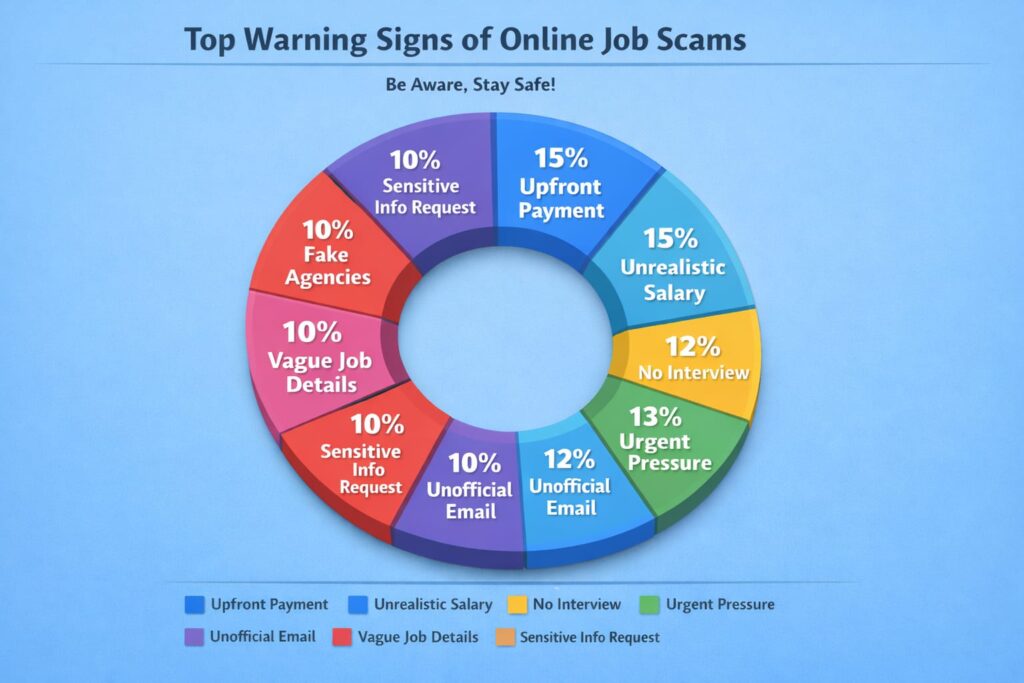
Top Warning Signs of Online Job Scams
| Feature / Tip | Safe Online Jobs | Scam Online Jobs |
|---|---|---|
| Payment | You get paid after work | Ask for upfront fees, deposits, or software charges |
| Job Offer | Clear offer letter with company email | Fake offer letters, Gmail/Yahoo email |
| Salary | Realistic pay based on skills | Promises high income for simple tasks |
| Hiring Process | Interviews, skill checks, verification | Instant hiring, no proper interview |
| Job Details | Clear responsibilities and company info | Vague job description, unclear company info |
| Platform / Contact | Verified portals (Upwork, Fiverr, LinkedIn) | Moves chat to WhatsApp, Telegram, or social media |
| Recruiter Info | LinkedIn profile, official company details | Fake recruiters, no online presence |
| Tasks | Genuine work (writing, design, support) | Social media likes, subscriptions, or simple data entry |
| Security | Personal info shared only after verification | Requests bank details, ID copies, OTP codes |
| Risk Level | Low risk, secure payment | High risk, possible money or data loss |
How to Find Safe Online Jobs and Avoid Scams
You can avoid scams by following safe steps. First, know where to look. Then, follow these tips.
- Apply on Official Websites
Go to the company’s official career page.
Do not trust random social media messages. - Use Trusted Freelance Platforms
Use well-known platforms like Upwork or Fiverr.
They protect your money and work. If you are new to freelancing and unsure how to balance home responsibilities, read Manage Work From Home With Kids: 10 Proven Tips for Parents for practical guidance. - Learn Useful Skills
Get skills like writing, graphic design, or social media management.
Skilled jobs are safer than “easy money” offers - Make a Simple Portfolio
Show your past work online.
Employers trust people with proof of work.
Real-Life Story: How a Work From Home Scam Targeted Sara
Sara, a 28-year-old freelancer from Karachi, was looking for legitimate work-from-home jobs. One day, she got an Instagram message for a remote data entry job promising $500 per week—too good to be true.
She received a “job offer” email, but the recruiter asked for a $50 registration fee. Red flags appeared: vague job details, urgency, and a Gmail email instead of a company domain.
Luckily, Sara checked the company on a BBB warning page for work-from-home scams. She didn’t pay and reported it to cyber authorities.
Now, Sara only applies through verified platforms like Upwork and always checks recruiters. Her story shows how easy it is to fall for online job scams and why awareness is important
What to Do If You Encounter an Online Job Scam
If you think you were scammed:
- Stop replying
- Inform your bank
- Change passwords
- Report to cybercrime authorities
- Warn others
Act quickly to reduce damage.
Final Thoughts
Online job scams are rising every year. But, you can stay safe.
Remember:
- Never pay to get hired
- Never share bank details
- Always verify the company
- Do not rush
With awareness and smart steps, you can find real work-from-home jobs and avoid scams. Also, if you’re looking for genuine earning ideas in Pakistan, explore our detailed guide on Online Work for Housewives in Pakistan: Earn from Home (2026) for trusted options.
FAQs: About Online Job Scams
Check the company website. Look at the email domain. Search the company on LinkedIn. If everything looks real, it is safer.
No. Many remote jobs are real. However, you must verify before trusting any offer.
Typing jobs, data entry jobs, WhatsApp task jobs, and fake recruiter emails are common scams.
Sometimes banks can help if you report quickly. Always report fraud as soon as possible.
You can report to your country’s cybercrime department or online fraud reporting portal.