What Is Remote Work? A Beginner’s Guide to Working Remotely
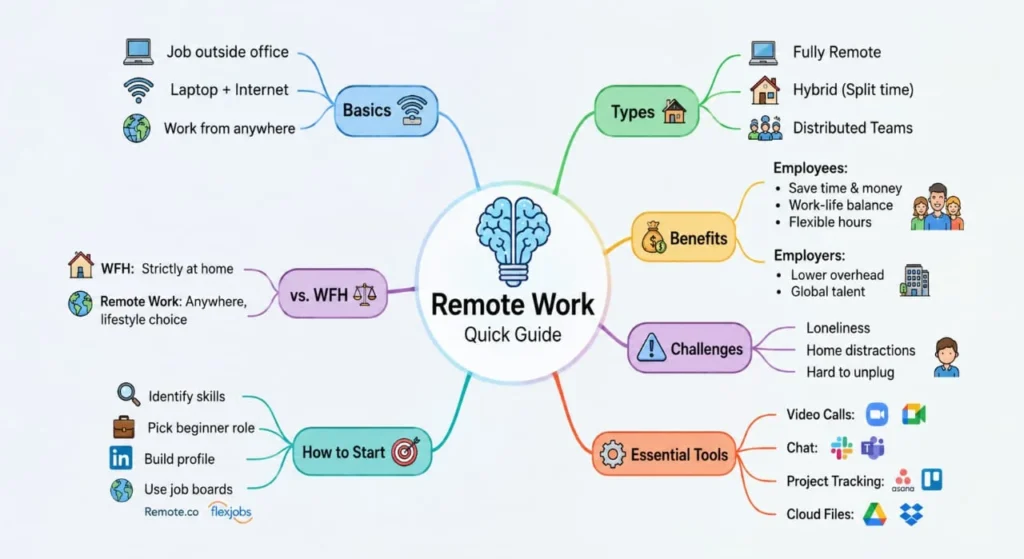
Remote work is a flexible arrangement where you do your job outside of a traditional corporate office. Instead of commuting to a building every day, you can work from home, a local coffee shop, a co-working space, or anywhere else with a stable internet connection.
This guide will help you learn about remote job options, the tools you need, and how to get started this year.
What is a Remote Worker?
A remote worker is an employee or freelancer who fulfills their daily job duties without going to a physical company office.
Thanks to modern online tools, you do not need to sit in the same room as your boss or team members to do your job well. As long as you have a laptop and internet access, you can work for companies based anywhere in the world.
Different Types of Remote Working
Not every remote job follows the same schedule. There are three main ways people do remote work today. Understanding the main types of remote working can help you choose the option that best fits your lifestyle, schedule, and career goals.
- Fully Remote: Your job is 100% online. You never have to visit a physical office.
- Hybrid Work: You split your time. For example, you work from home three days a week and go to the office for two days.
- Distributed Teams: These are companies that have no central office at all. Every single employee works from a different city, country, or time zone.
Remote Work vs. Work From Home (WFH)
People often use these terms interchangeably, but they mean slightly different things:
| Feature | Work From Home (WFH) | Remote Work |
|---|---|---|
| Location | Restricted strictly to your home. | Anywhere (cafe, library, or while traveling). |
| Flexibility | Often tied to local office hours. | Highly flexible hours across different time zones. |
| Setup | Usually a temporary or hybrid model. | Designed to be a permanent, mobile lifestyle. |
To understand how this fits into your career goals, read our full breakdown on telework vs remote work.
Why Companies and Staff Choose Working Remote
Choosing a working remote lifestyle offers clear advantages for both businesses and their employees.
Pros for Employees
- No Daily Commute: You save hours every week by skipping traffic and public transit. This also saves money on fuel, parking, and train tickets.
- Better Work-Life Balance: It is much easier to manage household errands, doctor appointments, or family time when you control your environment. If you are a parent, you can learn to manage work from home with kids more effectively.
- Flexible Hours: Many remote roles let you choose when you are most productive, whether that is early morning or late at night.
Pros for Employers
- Lower Overhead Costs: Companies save massive amounts of money on office rent, electricity, office furniture, and daily snacks.
- Global Talent Pool: Employers are no longer forced to hire only people who live near their office. They can hire the absolute best person for the job, no matter what country they live in.
Essential Tools for Remote Working
To keep tasks organized and talk to your team smoothly, you will need to learn a few basic digital apps:
- Video Calls: Zoom, Google Meet, and Microsoft Teams are used for face-to-face team meetings.
- Chat Apps: Slack and Microsoft Teams replace quick office drop-ins for daily text conversations.
- Project Tracking: Asana, Trello, and ClickUp help you see your tasks, deadlines, and project updates in one place.
- Cloud Files: Google Drive and Dropbox let you safely save, share, and edit files with your coworkers in real time.
How to Work Remotely (Even with No Experience)
You do not need an advanced tech degree to pivot to remote working. Many industries look for beginners who have basic computer skills and a strong willingness to learn. If you want to know how to work remotely, follow these clear steps:
- Identify Your Skills:
Think about what you are already good at. Can you write clearly? Are you organized? Do you enjoy helping people solve problems?
- Pick an Entry-Level Role:
Look for beginner-friendly roles like customer support, data entry, virtual assistance, or social media moderation.
- Build a Clean Profile:
Set up a professional LinkedIn profile that highlights your data skills, writing abilities, or software knowledge.
- Use Trusted Job Boards:
Avoid generic websites that might list scams. Stick to verified platforms like FlexJobs, Remote.co, and LinkedIn.
If you are a student looking to make money between classes, check out our dedicated list of remote jobs for college students. If you are younger and want to build your savings early, read our guide on how to earn online at 16.
Common Challenges and How to Fix Them
While working out of an office sounds perfect, it does come with specific hurdles and challenges.
- Loneliness: Working by yourself all day can feel isolating. The Fix: Work from a public library or coffee shop a few times a week to be around people.
- Home Distractions: Family members, pets, and household chores can break your focus. The Fix: Set up a specific workspace with a door you can close, and establish clear “work hours.”
- Unplugging From Work: When your office is your home, it is easy to work late into the night. The Fix: Shut down your computer completely at the end of your scheduled workday.
Conclusion
Remote work gives people the freedom to earn a living without commuting to a traditional office. Whether you want a full-time remote career, a flexible side job, or a work-from-home opportunity, understanding the different types of remote work can help you choose the right path. With the right skills, tools, and self-discipline, almost anyone can start working remotely and enjoy a more flexible lifestyle.
Ready to Start Working Remotely?
Now it’s your turn. Explore remote job opportunities and take the first step toward building a flexible online career.
Frequently Asked Questions
It is any job where you complete your tasks through the internet instead of commuting to a physical office building owned by your employer.
Yes. Many high-paying fields offer completely remote options, including software engineering, digital marketing, copywriting, and project management.
Yes. Students, career changers, and freelancers can all find online opportunities. If you have a stable internet connection and the discipline to manage your own time, you can excel in a remote career. For a step-by-step look at building an online income, view our complete online work guide for beginners.
No. Remote work means doing a job outside a traditional office, while freelancing means working independently for clients instead of being employed by a company. A remote worker can be either an employee or a freelancer.
Most remote jobs require communication, time management, basic computer skills, and the ability to work independently. Some roles may also require specialized skills such as writing, customer support, marketing, or data analysis.


Je m’appelle Njaka, j’ai 32 ans et je suis mariée. Je suis titulaire d’un diplôme de Licence en Gestion Management, obtenu en 2019 à l’IFT.
Après l’obtention de mon diplôme, j’ai évolué dans le secteur industriel, où j’ai acquis une expérience professionnelle solide et diversifiée.
En 2022, j’ai travaillé chez Accord Knits en tant que Compliance, avec pour principales missions le suivi de la conformité, le respect des normes industrielles, l’application des procédures internes et la coordination avec les différents services.
En 2025, j’ai intégré CMT en tant que Responsable Export Management dans le secteur de l’approvisionnement, où j’étais chargée de la gestion des opérations d’exportation, du suivi des commandes, de la coordination logistique, de la gestion documentaire et des relations avec les partenaires et fournisseurs.
Par ailleurs, je possède de bonnes connaissances en logiciels informatiques de gestion, notamment les outils de gestion administrative, de suivi des stocks, de traitement des données, ainsi que les logiciels bureautiques et systèmes informatisés de gestion. J’ai également des compétences en informatique appliquée à la gestion, contribuant à l’optimisation des processus et à l’efficacité opérationnelle.
Grâce à mon parcours, j’ai développé des compétences en gestion et management, export-import, conformité, approvisionnement et informatique de gestion, avec un fort sens de l’organisation, de la rigueur, de la responsabilité et du travail en équipe.
Hello
Thank you for sharing your background and experience. You have strong skills in management, compliance, and export operations. We regularly share career guidance, remote job resources, and tips that may help you find suitable opportunities.
Please explore our articles related to remote management, compliance roles, and export-related careers, and feel free to check back for updates.
– RemotelyUp Team